Reviews, Views and Adventures in Content Creation

Showing posts with label filmmaking. Show all posts

Monday, January 14, 2013

Latest Vlog on "Life Online!"

Contribute at http://tinyurl.com/acegrw4

We're slowly putting together a new strategy to make the film a reality.  More news soon!

Saturday, December 8, 2012

Three Great Documentaries


This is the second in a series of behind-the-scenes blogs about the story behind the making of a documentary - in this case, my film, "Life Online," the story of a family in Florida that's uniquely dedicated to the "YouTube" lifestyle.   Interested? Donate at http://tinyurl.com/acegrw4

These blogs and vlogs will trace the evolution  of this project as I prepare, shoot and edit "Life Online." I hope these prove helpful to aspiring filmmakers.


There are a number of films that have inspired my upcoming documentary, "Life Online," the story of a family that has embraced the YouTube "lifestyle."  With three boys and their mom all creating content for their individual lifestyles, and all family members contributing to their non-stop production "studio," this film will offer a great perspective on why more and more people are deciding to express themselves publicly through YouTube and social media.  "Life Online" asks, 'What happens to family life when there's an audience to serve?'

Three documentaries in particular loom large in my decision to tackle this project:

Considered by some as the original 'reality show,' "An American Family" was a multi-part public broadcasting series featuring the life of a "typical" suburban family in Santa Barbara in the early 1970's.  They turned out to be anything but typical, as their family literally disintegrated under divorce and a series of dramatic revelations by each family member.  Unlike today's "reality" programs, this documentary wasn't subtlety moved along or even scripted by the producers.  Events simply unfolded from May to September of 1971, during which time Producer Craig Gilbert's team shot hundreds of hours of 16mm film.   It's also worth noting that shooting a film like this in the early 1970's required cumbersome camera, lighting and audio equipment, creating a  disruptive environment that some suggest may have been a provocative factor (among others) in the family's demise.

I'll long been fascinated with the patience, dedication and trust necessary to create "An American Family."  Unlike so many of today's "reality" shows that pretend to portray life as it unfolds, this program felt authentic.

Oscar-winning director Michael Apted, who has moved back and forth between feature films and documentaries, continues to create the "7 Up" series of feature documentaries, an extraordinary portrait of a group of ethnically and economically diverse Britons whose lives he has revisited every seven years since they were seven years old - now, over fifty years.  Inspired by the Jesuit saying, "Give me a child until the age of seven and I will give you the man," this is a uniquely revealing portrait of human nature.  The "7 Up" films not only prove that personality may indeed be in place, but they're also an extraordinary tribute to the resilience of human beings in general.  Apted shows a respect for his subjects that offers a great example for any filmmaker. (Here's a review of the latest film in the series, "56 Up")

Respect for the subject was the central factor in the effectiveness of "The Boy Mir." Director Phil Grabsky's film follows a peasant boy in Afghanistan from ages eight to eighteen, during the dramatic events of the last decade, as he and his family struggle to survive amidst the chaos and then emerging new freedoms transforming their world.  Grabsky returned to Afghanistan periodically over ten years to tell Mir's story, creating a film that personalizes a story that exists for the West mostly in impersonal headlines.   (Here's my review of the film; I had an opportunity to interview Grabsky about 'The Boy Mir. ' Here's my blog, 'The Minute You Pull Out a Camera, You're Intervening').  

"An American Family," the "7 Up" series and "The Boy Mir" are varied in style and approach - but share three important elements that, I feel, make them effective films: Dedication of the filmmakers, trust and mutual respect between the filmmakers and their subjects, and uncommon patience.  If I have the opportunity (Consider contributing here) to create "Life Online," that's what I'll be striving for.

Tuesday, November 13, 2012

Talking It Out: Documentary Interview Techniques


This is the first in a series of behind-the-scenes blogs about the story behind the making of a documentary - in this case, my film, "Life Online," the story of a family in Florida that's uniquely dedicated to the "YouTube" lifestyle.  

In today's blog, I share some of my favorite basic techniques in conducting an effective, "authentic" interview.  

First:

Be prepared

This doesn't just mean that you should do your research - you need to be technically prepared as well.

Whether you are your own crew, or you have one, two or three people helping you on documentary shoot, it's imperative that you work with individuals that are experienced and/or motivated to prepare camera, sound and lighting as quickly and efficiently as possible.  There's always going to be a balance - some would say tension - between setting up a great shot, and engaging your subject as quickly as possible.

Interviewing Neil Parikh, one of the boys featured
in my documentary, "Bollywood Steps"
If you have an individual waiting to be interviewed, and the preparation process is too slow, they start to feel impatient - even rushed - and increasingly nervous.  A minor inconvenience becomes a major disruption.  Particularly in sensitive situations, this can impact the quality of the interview when it finally occurs.

Thursday, August 23, 2012

Honesty On Film - Ridley and Tony Scott's "Boy and Bicycle"


After the recent death of motion picture and television director Tony Scott (Top Gun), I became aware of "Boy and Bicycle," a 27 minute short film his older brother Ridley Scott (Bladerunner, Black Hawk Down)had created as a film student in 1965.  It featured Tony as a teen skipping school and riding his bike around his English coastal town.  We hear his interior dialogue as Tony's mind wanders from random thoughts on his home life, his school life and his immediate surroundings.  

This fictional film honestly captures the mood, sarcasm, frustration and curiosity of a sixteen year-old boy.  The deceptively simple plot line shows off the talents of both Scott brothers, who would go on to develop substantial careers in mainstream motion pictures and television.

"Boy and Bicycle" reminded me an experience I had some years ago when I brought a half dozen teens from a filmmaking workshop I was teaching to a film festival in Los Angeles. We attended a screening featuring a collection of short films created by high school students across the city.  The films ranged from comedy to drama to animation and documentary, all a few minutes or less in length.

After the screening, I asked the boys which films had the greatest impact.  They weren't interested in the action films, or films on current issues impacting teens, or anything that reflected the high production value that some teen videos can have in a company town like L.A.  Instead, they were in awe of a series of documentary-style films that, like the fictional "Boy and Bicycle," featured the introspective voice-over thoughts of individual subject/filmmakers about their lives, set to video featuring moments in their lives, often seeming to wander aimlessly, as the Boy in Ridley Scott's film.  

The boys, who were residents at a facility for those recently released from juvenile hall, especially valued the simple, honest nature of these short autobiographical films.  To them, at that time in their lives, honesty was rare and unusual.

Honesty, after all, is at the core of all great and effective art - whether a painting, music, motion pictures - or even a vlog on YouTube.  Learning to create can be a challenge - but the struggle to create truthfully can last a lifetime. 

Though it's a forty-seven year old black and white short film, I recommend catching up with "Boy and Bicycle" - hyper-personal and directly engaging, you may discover that it speaks directly to the age of YouTube.

What do you think?

Thursday, March 8, 2012

Why Young Filmmakers Should Go Viral


As video production equipment and software have become simpler and more affordable, well-appointed "filmmaking" programs have thrived.  Quality, of course, varies, but for aspiring content creators there's never been a better time to learn the craft.

 One of the greatest challenges facing both students and professors, however, is determining the skills necessary to push their newly created content out to an audience. While many seem focused on the traditional "big-ticket" markets of television and motion pictures, creating content for a digital audience offers the media entrepreneur an opportunity to "get in on the ground floor" of a rapidly developing industry.   It's no longer productive for a media student to simply learn to create.  Learning how to create media and use it to achieve goals or ambitions is a critical part of that education.

Recently, I had the opportunity to speak with Noah Arceneaux (email: noah.arceneaux@sdsu.edu), a professor of Journalism and Media Studies at San Diego State University.  Professor Arceneaux's course, Creative Uses of Emerging Media, is the capstone course in the Media Studies program.  While originally intended as a class focusing on theory, Arceneaux devised a concept to bring in "real world" experience.

The assignment:

"The challenge is seemingly simple, though also difficult at the same time – create a video and accumulate as many views on YouTube as possible. You will perform this task in groups of your own choosing."

Each student is also required to present a paper on their contribution, and any insights, knowledge or expertise they acquired along the way.

Exactly how students acquire views is up to them.    Some, naturally, focus first on their existing social networks.  Others, he notes, also extend their efforts into the analog world.  One group posted flyers with scannable QR codes at strategic locations around the SDSU campus.

The first class, offered last fall, was a great success. The winning video, to date, has accumulated 11,783 views.  Arceneaux notes that "the student had the clever idea of taking advantage of the nyan cat meme AND recognized that "costume" was a popular search term near Halloween."

Here's a collection of the Fall, 2011 videos, and Professor Arceneaux's observations:

http://jms492fall11.wikispaces.com/Viral+Videos

While the videos themselves didn't offer great production value, this initial experience of creating for an audience in the digital age could be invaluable for any student hoping to build a forward-looking career in content creation.

In fact, it just might be essential.

Saturday, January 7, 2012

The Vlogger Interviews: Noah [Knowahsark]


If you really want to understand the massive impact that online video is only beginning to bring to the media industry, it's important to go right to the prime audience - the teens that are not only consuming online entertainment, but creating it as well.


18 year-old Noah is a freshman in college.  He's both an enthusiastic member of the vlogging audience, and an occasional vlogger himself (he's Knowahsark on YouTube).  In many ways he's typical of the more media savvy of  his generation.  Like many of his friends, he's found YouTube content more attractive than typical television fare.  He's also a new perspective that's likely keeping traditional media executives awake at night.

"I definitely think YouTube videos / online media is more appealing," he says, "and that might have to do with growing up with the internet, around the internet. I mean I've been online, on MySpace and Zynga, those sort of things since 5th grade.  And so I think that might play a part, but I think just seeing what other people can create without...big television networks and crews and that sort of thing - people can create their own content, which I find just as, if not more entertaining than what's on TV. For instance, like, I've been watching the VlogBrothers for years now (which sounds really weird to say).  I just find it so much more engaging and interactive and you feel more a part of it, I guess."

Wednesday, January 4, 2012

The Uncanny Valley of "TinTin"

My latest 5-minute audio podcast - exploring the strange uneasiness I felt while watching "The Adventures of TinTin" The "Uncanny Valley" of "TinTin" (mp3)

Monday, December 12, 2011

Are We Expecting Too Much? Motion Capture and the “The Adventures of TinTin”

I recently had the opportunity to see The Adventures ofTinTin, the Steven Spielberg  3D motion capture film based on Hergé’s iconic European comic books of the mid-20th Century (here's the main TinTin Site).   The film is visually spectacular - a real showcase for state-of-art-graphics technology.   Whereas Hugo combines live actors and CGI technology, TinTin is entirely a computer graphics creation.

Used Under Fair Use
Simply put, The Adventures of TinTin is the story of a boy/young man detective (his age is unspecified) and his trusty canine sidekick, Snowy on an international  adventure in search of a lost pirate's treasure.  It's a comic book come to life as never before - on sea, in the air - and on land - including some truly wild stunts that would have been almost unthinkable in a conventional film. 

Working with Peter Jacksons WETA Digital, which provided animation and special effects, Spielberg doesn't attempt to create photorealistic human actors.  The motion picture version of the TinTin character is a representation of the comic book version (early in the film, a street artist creates a caricature of the reimagined TinTin that brings the two interpretations together).  Like most cartoons, foreheads might be large, noses might be big - proportions aren't quite "right."  This isnt a cartoon, though.  This occupies a special territory somewhere between real and imagined. 

As I watched TinTin, I found myself wondering how much more of an experience this film would have been with live actors.   Though the motion capture technology used here really allows for an effective "performance," I felt a curious emotional detachment from the characters and experiences on screen.

Is such a comparison fair?  After all, TinTin is clearly a comic book character.  This is "The Adventures of TinTin," not the coming of age of TinTin.  As an adventure, it's succeeds probably beyond any previous comic book adaption.  Even in this success, though, there's a unsettling awareness that something's missing.

The advancing nature of the technology, in my opinion, is creating a subtle expectation of humanity.  With the creation of characters like TinTin, with his full range of emotions and human-like movement, we're beginning to instinctually expect these creatures to be more human, with all of the imperfections and inconsistencies that entails.   Though TinTin's performance is motion captured (from actor Jamie Bell), even the most sensitive motion capture can't recreate the distinctive human texture that makes a live performance wholly unique.  As biological creatures, humans are never perfect.  Even so-called beautiful people simply inhabit imperfections that happen to be considered attractive.  Humans are not symetrical.  We arent believeable, were simply the real thing.  TinTin is engaging, but he cant quite generate empathy, even in him most harrowing moments.

I highly recommend seeing both The Adventures of TinTin and Martin Scorceses Hugo back-to-back to gain a real perspectives on both the wonder and (current) limitations of CGI and motion capture technology.  Both are cinematic masterpieces and enjoy the most effective 3D yet.   Compare the performance of Asa Butterfield as Hugo and the motion-capture interpretation of Jamie Bell's performance as TinTin.

Let me know what you think. 

Wednesday, November 30, 2011

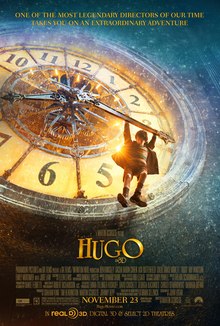
Why I Think Vloggers Should See "Hugo"


Martin Scorsese's new film, Hugo is a rare film that combines rich effects and an intimate story in an experience that is both emotional and visually stunning.  It's also a tribute to the earliest days of motion pictures.

Based on Brian Selznick's New York Times best-seller, "The Invention of Hugo Cabret," Hugo is the adventure of a clever and resourceful boy living on his own in the hidden upper reaches of a magnificent Paris railway station nearly one hundred years ago. Left to maintain the fanciful clockworks in the station after his uncle disappears, Hugo embarks on a search to solve a mystery left by his father, and in the process also discovers an entirely new life.

An important aspect of the film is Hugo's connection to real-life filmmaking pioneer George Méliès, whose one minute film A Trip to the Moon, created in 1902, is considered cinema's first blockbuster. A former magician, he produced over five hundred films in his short career, and is considered the father of special effects:  the first double exposure, the split screen, and the dissolve are just a few of his innovations.  He was also the first to use storyboards in the preparation of his films.  He was also a pioneer in meteoric rise and fall of a film career - he was bankrupt and largely forgotten by 1910.   As in Hugo's fictional tale Melies was eventually rediscovered and enjoyed in his later years the adulation he deserved.

The boy Hugo is a fan of the movies, so we're treated to both original and recreated clips from many of Méliès  films, and even meticulously recreated behind the scenes footage.  We'll see some of the classic faces of early cinema, including Harold Lloyd (whose stunt hanging from a huge clock face is recreated as Hugo is suspended outside an impossibly tall clock tower).

Apart from such direct visual connections,  Hugo itself is a tribute to the artistry of motion pictures.  Presented in 3D, and featuring a seamless marriage of live action and digital imagery, we experience somewhat of the  sense of wonder early moviegoers must have felt.

I tend to draw a direct parallel between early filmmakers like Méliès, who fearlessly produced hundreds of short films in a quest to develop their new craft, and serious online content creators, who are essentially doing the same thing in thousands of far flung locations.  I don't believe many vloggers and webseries creators are aware of the history of early cinema, so I would hope that many see Scorsese's film, and draw the parallel themselves. 

Méliès wasn't simply a entrepreneur out to make money - he loved exploring his craft and seeking out new ways of bringing the wonder of motion pictures to his audience. 

That spirit of creativity and risk-taking eventually drove motion pictures to become a major force in creative expression; there are still lessons to be learned from the pioneers of early cinema. 

Thursday, September 22, 2011

The Vlogger Interviews: Lane Fournerat

Just what is vlogging, anyway?   

Ask a random selection of vloggers why they vlog, and you’ll get five different answers.  To some, it’s an opportunity to be an entrepreneur, to another a chance to make friends, or bring people together for a cause – or simply a means of pure self-expression. 


Ask those same vloggers how they vlog, and the road map becomes even more complicated.    The art of creating online video isn’t simply creating a video and posting it.   Vlogging is also an interactive art.  The vlogger, in a very real way, creates a direct connection to his or her audience. 

"The Vlogger Interviews" is a series of vlogs and blogs exploring the definition of vlogging – from the vlogger's perspective.


Lane Fournerat  of Lafayette, Louisiana has a whole family of YouTube channels – in TV terms, LaneVid is the vlogging equivelent of a variety show; TheFunnyRats (a play on his last name) is his reality show, co-starring his wife and baby girl.  Other channels feature his other interests – drumming, mobile apps – even video game walkthroughs.

“It’s me.  That’s the best way that I can describe it.  If you like what I like, then you’ll like what you see.”

According to Lane, The job of a vlogger isn’t simply to create content, but also “to build a core group of people who will really stand behind you and really appreciate what you’re doing for them, which is entertaining them everyday.”  His core audience becomes the vlogger’s friends and supporters.  The comments on a video aren’t just about feedback – they’re about true interaction.

Lane graduated from college with a  degree in the performing arts.  His dream, like so many others before him, was to become an iconic filmmaker, “I wanted to make my “Feature Length Film” - THE film I was going to be known by.”  Like so many others before him, though – it didn’t work out that way.  He discovered something better:  YouTube.

Monday, September 12, 2011

Jackass Videos, Bernie Madoff and Online Integrity


In a response to my recent blog, "Six Reasons Why Every Film Student Should Have a YouTube Channel," an educator responded with concerns about the integrity of the content that some content creators might choose to produce.  What kind of content has integrity?  What kind of content is worthwhile?  That's a difficult question, and varies depending upon age, culture and interests.  

If a YouTuber creates a Jackass knock-off that earns him tens of thousands of subscribers, does that content possess a specific standard of integrity for his audience?  If another creates an immensely popular channel promoting conspiracy theories and the illusion of journalistic values, can his follower's simple belief in his integrity actually define his integrity?

Art, as the saying goes, is in the eye of the beholder.  Integrity, defined by Meriam-Webster.com as "firm adherence to a code of especially moral or artistic values," is also distinctly subjective - varying between cultures, societies, neighborhoods - and even small groups of friends. 

At one time, Bernie Madoff was perceived as a man of great integrity:  A trustworthy, honest man with impeccable credentials who might be trusted with one's life savings. He formed and maintained an illusion for decades, stealing billions from investors in the pursuit of personal gain.  Violating the trust of virtually everyone, he proved himself to be a man without integrity of any definition.

Likewise, the YouTuber who creates (willingly or through ignorance) an illusion of journalistic integrity amidst suggestions of dark conspiracies is deceiving his followers with declarations of "evidence" where there is none, or of "experts" who are not whose own integrity would be questionable.  As Bernie Madoff deceived his clients, this content creator may be using and manipulating his audience strictly for personal gain, and has no qualms or even concerns about the accuracy of his content.

On the other hand, if the YouTuber creating a Jackass knockoff promises to entertain his audience with a certain type and quality of entertainment with each episode - and delivers on his promise - he might be said to have more integrity than the conspiracy theorist.  His audience's trust isn't mis-placed - they're obtaining what they seek.

But does the Jackass YouTuber really have integrity?  Isn't he, instead, promoting violence?  Isn't he contributing to the destruction of moral, ethical and artistic values across media by helping to popularize mindless entertainment?  After all, we're talking about thirteen year-olds throwing themselves into walls and jumping into thorny bushes. 

Does every film student - or content creator - need to be a moral crusader, create family friendly content, and ignore shallow celebrity culture?   As diverse individuals, the answer is no.  As prospective media professionals, however - it's imperative to understand and develop a sense of integrity to both content and career. 

THEN make some cool Jackass videos!

What's your opinion?

Thursday, September 1, 2011

Abuse, Fame, and Other Things - A Review of "Family Band: The Cowsills Story"


A lone musician in his early 60's carries his guitar into a small English pub in Woodland Hills, California.  Amidst the clatter of the restaurant, and the disinterested voices of patrons and bartenders alike, he begins his lonely set.  In a voice-over, the musician introduces himself.  Once he was part of a band, he tells us.  They were famous, and they had a handful of top hits by the time he was seventeen - but today, most wouldn't recognize their name.   So begins Family Band: The Cowsills Story, a documentary journey through the lives of a singing family whose songs became standards of the era, but whose lives were nearly destroyed in the process.   The lone musician is Bob Cowsill, and he guides us through his family's harrowing journey.

The Cowsills at the height of their fame / Pic from their website

For a very few years in the late 1960's, The Cowsills were a musical and marketing sensation.  The band, consisting of various numbers of brothers, a sister - and their mom,  created enduring and even iconic hits  ("The Rain, the Park and Other Things", "We Can Fly," "Hair," "Indian Like"), dominated teen fan magazines, appeared everywhere on television (including the Ed Sullivan Show, where they performed on the same stage on which their idols, the Beatles had played a few years before).   They were the direct  inspiration for the "Partridge Family" sitcom.  Their image was so wholesome that they served as national spokespersons for the Milk Advisory Board appearing in numerous print and television ads.   Then, as quickly as they rose to fame, they spiraled into oblivion.

Monday, August 8, 2011

Six Reasons Why Every Film Student Should Have a YouTube Channel


  1. The opportunity to create content for an audience - and receive direct feedback from that audience. Viewers can provide their feedback by "thumbing up" a video, leaving comments, and adding the video to their list of favorites. In addition, YouTube provides a service called "Insight" to every channel and every video, allowing the channel owner to analyze how their audiences are responding on a wide range of categories, including age, location, attention (how long people actually watch each video), and more. 
  2. The opportunity to network , learn- and collaborate - with a wide range of like-minded content creators from around the world. Artists of all types can work together with an ease never before possible 
  3. The chance to develop, early on, a track record as a filmmaker / content creator. Many YouTubers, without any training, have used their channels to generate real world content creation jobs. The channel, in effect, becomes a living, breathing, constantly changing demo reel with real-world endorsements from an engaged audience. 
  4. With commitment to a YouTube channel, the filmmaker will need to develop content on a regular basis - not only keeping the "creative juices flowing," and developing his or her craft, but developing the creative discipline critical to success. 
  5. The chance to develop the public speaking skills that are critical for any director - to be able to talk confidently to an audience with ease. Though vlogs are typically created alone, they're distributed publicly. Vloggers who host their own channels are also building extemporaneous speaking skills as well.  
  6. Building and evenutally monteizing a YouTube channel offers the chance to develop valuable real-world entrepreneurial skills that successful filmmakers need.  The possibility of becoming a YouTube partner (and sharing in advertising revenue), is only one avenue through which an individual can financially benefit from their channel. Building an audience also provides the opportunity to create independent partnerships with advertisers and engage in additional opportunities such as product placement.
Your feedback is encouraged!

Tuesday, June 28, 2011

Blogcritics Documentary Review: "The Boy Mir"


Image Used by Permission

(Check out my interview with Phil Grabsky, director of "The Boy Mir")

This review originally posted on Blogcritics.org


The Boy Mir – Ten Years in Afghanistan, a feature documentary now making the rounds at film festivals worldwide, offers an intimate perspective of daily life in Afghanistan rarely seen by western audiences. Over a period of a decade, British filmmaker Phil Grabsky returned repeatedly to this war-ravaged country to visit Mir, a young boy living with his family in remote villages far – but not untouched – by the battles raging throughout the country.

Only eight years old when we first meet him, Mir grows into a young man, with hopes and dreams of a better for himself and his family. His family, at times, is literally dirt poor –living in mountain dug-outs high above the plain, struggling daily to survive. He understands that school is the key to his future, but his attendance is spotty and inconsistent – he must tend to his family’s livestock more and more, as his father is in failing health and is less able to perform the arduous work necessary for the family to survive.

Mir’s life will seem surprisingly familiar to the western audience. Material desires – for bikes and motorbikes – will dominate his thoughts for a time, and as he grows older and the family’s life marginally improves, he dominates use of the family’s new cell phone with calls to girls in distant towns. As he grows, he also develops an awareness of his situation, his future, and what he must to succeed beyond his family’s bare existence.

National and international politics are distant here – but never out of mind. They’ve fled to the remote mountain settlement because of the incursion of the Taliban; they return to when the Taliban are on the run. These are simple people struggling to survive in a world hopelessly beyond their control. They’re not religious zealots, or freedom fighters. Like most people around the world, they only want to live their lives in peace.


Knowledge of the Americans and British are mostly anecdotal in this remote enclave. During one tribal meeting, an attendee struggles to understand the relationship between the two allied nations, asking if the U.K. is part of the U.S. (he's corrected by wiser villagers).   When several American troops in a pair of military vehicles tentatively visit the town, villagers are gracious, but puzzled by the visit, and the peculiar gifts they’re given by the American soldiers.

The Boy Mir – Ten Years in Afghanistan is actually a follow-up to Grabsky’s award-winning film, The Boy Who Plays on the Buddhas of Bamiyan, featuring Mir and his family when they lived in the shadow of what once were gigantic and ancient statues of Buddha, blown to rubble during the Taliban’s reign.

Mir – the boy and the film - has an abundance of energy and hope for his future – though the road ahead is still unclear. For anyone struggling to truly understand the people of Afghanistan, this film provides an exceptional and moving introduction.

Sunday, April 24, 2011

Do Movies Miss the Vibe?

In my most recent vlog, I mention the availability of Kes, a 1969 British film by director Ken Loach. It's been unavailable in the US for quite some time, and this new release, restored and (in the edition I bought) clear as I've ever seen in blu-ray, is really a tribute to the truly beautiful independent film. As interviews in the new "Making of" documentary explain, this film was a landmark for British films in it's "naturalistic" style - shooting on actual locations - and with non-professional actors.

I find any great work of art contributed to or created by non-professionals to be happily subversive. That's why I like Kes.  To be clear, the filmmakers behind Kes were professionals - though this was one of Ken Loach's first feature films after a number of years producing BBC films.

Kes is powerful because of the deeply sensitive performances of many of the actors, particularly David Bradley, who played the lead, Casper.  In the "making of" documentary accompanying this edition, Loach describes a shooting style that pulled the camera and, as much as possible, the paraphernalia of filmmaking away from the actors as much as possible.  Loach created something that we rarely see on the screen.  Without impacting the flow of the film or it's watchability, we actually have the time, occasionally,  to study Casper's face - to gain an almost instinctual understanding of the central character.  As he trains the kestral, we're just as much watching him and the soaring bird.  When, in a classroom, he's yelled at by a teacher, we looking more closely at him than at the teacher.  It's not a question of pushing in to an intimate close-up, either - Loach often presents his characters very much in the midst of their environments.  We witness Casper's reaction to ridicule at his desk in the middle of a classroom, not in a single shot that isolates him from his surroundings.

In the "real" world, we get to know our friends and colleagues by words, actions - and the subtle hints of body language, facial expressions and the intangible "vibe."  In most films, we don't have the time to gather those signals - dialogue, camera placement and a well-written screenplay provide impressions to complete the experience.   After all, films by their very nature provide a shorthand perception of the world.  That said, I wonder if certain films lose some potential impact neglecting to craft an opportunity for the audience to  "read" the visual cues the govern human relationships.

Friday, April 8, 2011

Product Placement, Upside Down and Sideways - "Cooper and the Castle Hills Gang"

As Movies go, "Cooper and the Castle Hills Gang" is really standard kid's fare - a gang of kids on a mission, general moral lessons, and the standard hi-jinks. It's a well produced film, however, and the appealing cast and entertaining plot line that should keep kids engaged. It's set in the real-world upscale Texas community of Castle Hills, nicely presented as an ideal planned community. That's no accident.

"Cooper and the Castle Hills Gang" turns the idea of product placement upside down - for it is, in itself, a product created to promote the Castle Hills community. I discovered the film on Apple's trailer site - and found that it was available to view in full on at castlehills.com. Was it some sore of a pay-per-view scheme, I wondered? A site from which to order the video? As it turned out, castlehills.com is the community's sales site - on which poster art for the sixty-minute film serves as a link to a page of links to playable 8-10 minute sections of the film, and a behind-the-scenes short. They play smoothly- even on my iPad..

Though Coooper, the the boy who film's central character, does talk about his community as being the best anywhere, and shares with us the general features that, in a kid's eyes anyway, make it a great place to live, most of the film is plot driven (and never, by the way, leaves the confines of Castle Hill). Like most kids in similar communities, he "owns" his community.

Yes, it's clearly a blatant advertisement for the community - but it never pretends to be otherwise. After all, as of this writing, it's only available to view by visiting the community's website. I find that infinitely more appealing than spending $10 or more for a movie in a theater and being bombarded with contant, endless product placement.

While this sort of arrangement might not work for other types of cinematic fare, I think the producers may be on to something here.

...and I'd love to know how they managed to have their trailer listed on the Apple site, alongside the theatrical releases...

Sunday, March 13, 2011

Content Creation: Some Next-Phase Brainstorming

I'm currently preparing for the upcoming International Family Film Festival, which will be showing my film, "Bollywood Steps" on Saturday, March 19th.  I've prepared a poster, will make flyers available, and will generally attempt to "work" the festival to achieve my primary goals, which relate to generating future projects.  I'm been pondering my next steps. Here are some current thoughts:

I also have the sense that, as the saying goes, "nothing will ever be the same."  My interest is in wholly incorporating and adapting "social media" tools and hardware to create a newer form of expression, combining "documentary" type filmmaking with the immediacy and intimacy of social media.   The challenge, I think, is that any creation might be transitory by nature.  Some elements - recorded and edited video, for example - might be preserved, other more interactive elements would lose some of the sense of discovery that only exists in real time.   In much the way that the news stories of the day - Libya and Japan for example - are more immediately a meaningful "social experience" than ever before, less critical stories, experiences and pure entertainment will eventually engage audiences in the same way -
I don't think that particular "art" is wholly developed as yet.

At this point, from my perspective, a typical web series exists as a single element - the final video.  Everything else drives the audience to create viewership.  I have to wonder if there could be another model incorporating multiple channels simultaneously.  Paradoxically, I don't believe that scheduled entertainment (as in traditional television) will return to dominance.   I continue to watch developments with fascination, and look forward to my own upcoming explorations in this new form of content creation.

Sunday, January 16, 2011

Five Reasons I Respect YouTube Content Creators

A number of my "traditional" media colleagues don't quite understand why I'm choosing to go to Vidcon, the annual gathering of YouTube content creators.   As an independent (and traditional) content creator (aka filmmaker), I've come to greatly respect the spirit of the YouTubers that are constantly inventing (and re-inventing) the world of online video.

In my opinion, the best of them (your definition - YouTube is a place where there really is something for everyone) - have several traits in common.  Here are my top five:

1. They're Auteurs - they often do everything - write, producer, direct, act AND promote their work.
2. They're not equipment centered - they're content centered.
3. They're showing that grassroots independent co-production is no longer impossible - it's commonplace.
4. Like the earliest pioneers of the motion picture industry, they're often learning - and willing to learn - "on-the-job."
5. They respect, respond and interact with their audience

Next:  Five Things YouTube Content Creators Can Learn from Independent Filmmakers

Tuesday, January 4, 2011

Looking Ahead - A Few Initial Thoughts

Okay, so the holidays are over and the real work begins!

It seems that change is in the air, both in my own life, and the lives of many of my friends.  Numerous people are changing their work situations, re-calibrating their lives, and generally moving ahead again.  As devastating at the economic downturn has been, either people are tired of living in fear, or, just perhaps, things are starting to improve a bit.  I suppose that time will tell.  Regardless, I expect this to be an interesting year.

Currently, of course, one of my current activities is launching my documentary, "Bollywood Steps" into the world.  Available since December 15th, I haven't yet begun to promote the film, and its availability for purchase.  It's a great challenge - and I'm looking forward to seeing how far I can carry this.

My producing work (my freelance work) has started to pick up again, and other opportunities are beginning to develop.  I'm also looking forward to seeking out part-time university-level teaching opportunities in filmmaking/documentary filmmaking/editing.  I love teaching, but I really haven't had the opportunity in the last couple of years.

Finally, I made the commitment to attend VidCon again, the July gathering of online video/YouTube content creators at the Century Plaza Hotel in Beverly Hills.  I'm fascinated with the spirit of creativity online, and the success of so many of these young (and some old) filmmakers (they certainly don't see themselves in that light), that are creating a new form of expression.  At the same time, I'm not a big fan of the spectacle of  stardom - or really any celebrity culture - but I'd also say that most of the people that I've had the opportunity to meet are pretty well grounded.  I suppose it's a very clear reminder that YouTube stardom is limited when the same person who's mobbed inside the Century Plaza is all but ignored across the street at the Century Plaza mall...I look forward to sharing my observations as I continue my social media expedition!

Tuesday, December 21, 2010

Movie Moguls and YouTube Subversives

I recently finished watching TCM's seven part documentary, "Moguls and Movie Stars: A History of Hollywood," which traces the history of the film industry from its earliest days all the way up to the final fade out of the mogul era in the late 1960's.

While it didn't really cover any new ground, it did provide a great overall look at the evolution of the industry, and the unique personalities that built the early industry.  These pioneers - from Louis B. Mayer to the Warner Brothers, to Darryl Zanuck - not only invented (and continuously reinvented) the movie industry, but achieved success with pure tenacity.  That may sound somewhat cliche these days, but these guys (and women, the program illustrates) really did it.

For me, the most fascinating part of the program is the earliest episode, "Peepshow Pioneers"which looks at the industry in its very earliest days, from 1889 - 1907, when peepshows - those machines that individuals would peer into to view 10 or 20 second short films - became the craze.  The program reports that Thomas Edison's  studio (really, the first of its kind) produced close to a thousand of these short films in a single year.  In the beginning, these films consisted primarily of simple improvisational skits created by Edison's studio workers themselves.

I can't help think of parallels to the social media / YouTube world today, where so many are experimenting with a form of expression which is both an evolution of motion pictures, and it's own unique creation.  Of course, in those early days, a single man, Thomas Edison, who invented (or perfected) much of the technology that made the birth of the industry possible, and tried to hold onto a monopoly in the creation and distribution of content.  Today, media creation is open to all, and there are limitless variations on creating YouTube content - some for nothing more than self-expression, and others as entrepreneurial ventures.

The film industry wasn't invented by individuals from the theater world - it was created by people from unrelated worlds - or dirt poor kids  -  who created an opportunity that others may have ignored in their own sophistication.   If the social media platform does evolve, the driving forces that make it stand on its own will not, ultimately come from the existing media industries - but from the individuals who are creating audiences where none existed.

I suspect that most, if not all of the top YouTubers are individuals without filmmaking backgrounds.  Even though I'm a filmmaker, I love the subversive irony...