Reviews, Views and Adventures in Content Creation

Saturday, December 8, 2012

Three Great Documentaries


This is the second in a series of behind-the-scenes blogs about the story behind the making of a documentary - in this case, my film, "Life Online," the story of a family in Florida that's uniquely dedicated to the "YouTube" lifestyle.   Interested? Donate at http://tinyurl.com/acegrw4

These blogs and vlogs will trace the evolution  of this project as I prepare, shoot and edit "Life Online." I hope these prove helpful to aspiring filmmakers.


There are a number of films that have inspired my upcoming documentary, "Life Online," the story of a family that has embraced the YouTube "lifestyle."  With three boys and their mom all creating content for their individual lifestyles, and all family members contributing to their non-stop production "studio," this film will offer a great perspective on why more and more people are deciding to express themselves publicly through YouTube and social media.  "Life Online" asks, 'What happens to family life when there's an audience to serve?'

Three documentaries in particular loom large in my decision to tackle this project:

Considered by some as the original 'reality show,' "An American Family" was a multi-part public broadcasting series featuring the life of a "typical" suburban family in Santa Barbara in the early 1970's.  They turned out to be anything but typical, as their family literally disintegrated under divorce and a series of dramatic revelations by each family member.  Unlike today's "reality" programs, this documentary wasn't subtlety moved along or even scripted by the producers.  Events simply unfolded from May to September of 1971, during which time Producer Craig Gilbert's team shot hundreds of hours of 16mm film.   It's also worth noting that shooting a film like this in the early 1970's required cumbersome camera, lighting and audio equipment, creating a  disruptive environment that some suggest may have been a provocative factor (among others) in the family's demise.

I'll long been fascinated with the patience, dedication and trust necessary to create "An American Family."  Unlike so many of today's "reality" shows that pretend to portray life as it unfolds, this program felt authentic.

Oscar-winning director Michael Apted, who has moved back and forth between feature films and documentaries, continues to create the "7 Up" series of feature documentaries, an extraordinary portrait of a group of ethnically and economically diverse Britons whose lives he has revisited every seven years since they were seven years old - now, over fifty years.  Inspired by the Jesuit saying, "Give me a child until the age of seven and I will give you the man," this is a uniquely revealing portrait of human nature.  The "7 Up" films not only prove that personality may indeed be in place, but they're also an extraordinary tribute to the resilience of human beings in general.  Apted shows a respect for his subjects that offers a great example for any filmmaker. (Here's a review of the latest film in the series, "56 Up")
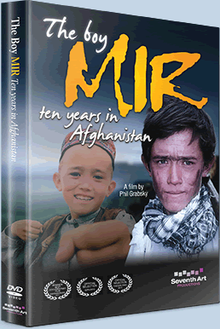
Respect for the subject was the central factor in the effectiveness of "The Boy Mir." Director Phil Grabsky's film follows a peasant boy in Afghanistan from ages eight to eighteen, during the dramatic events of the last decade, as he and his family struggle to survive amidst the chaos and then emerging new freedoms transforming their world.  Grabsky returned to Afghanistan periodically over ten years to tell Mir's story, creating a film that personalizes a story that exists for the West mostly in impersonal headlines.   (Here's my review of the film; I had an opportunity to interview Grabsky about 'The Boy Mir. ' Here's my blog, 'The Minute You Pull Out a Camera, You're Intervening').  

"An American Family," the "7 Up" series and "The Boy Mir" are varied in style and approach - but share three important elements that, I feel, make them effective films: Dedication of the filmmakers, trust and mutual respect between the filmmakers and their subjects, and uncommon patience.  If I have the opportunity (Consider contributing here) to create "Life Online," that's what I'll be striving for.

Monday, November 26, 2012

Big Media's Romance with YouTube: Why It Will Fail


The entertainment industry is still excited about YouTube.  In the November 26th edition of the Weekly Variety, "YouTube Newbies Wow the Biz," explains how "Big Media" is beginning to invest in Multi-Channel Networks (MLC's) like Fullscreen and Maker studios, with the hope of getting in on the ground floor of a new industry, farming new talent, and connecting with young audiences.

But do they really get it?

In the Sunday, November 25th edition of the Los Angeles Times, another article, "YouTube's Best Video Creators Now Have Their Space in the Sun" discussed YouTube's new Playa Vista studio, which caters to YouTube partners by providing them access to a state of the art production facility that might have previously been out of reach.  They'll be able to "up their game," improve their production value and create better and more ambitious content.

While this influx of investment and interest from both Big Media and YouTube will prove a fantastic opportunity for some of the top YouTubers, both sectors still seem to be curiously blind to the most powerful aspect to the world of online video - a direct connection with the viewing audience.

For the vast majority of YouTubers, those whose views may never reach the stratosphere, the real opportunity isn't necessarily in hooking up with Big Media -  or becoming part of the YouTube elite.  Learning how to better grow and engage their viewers/subscribers/followers/fans offers the best chance for most online content creators to build a future in that world.  The key isn't simply to share in YouTube's advertising revenue (which tends to really pay off only for those with at least tens of thousands of views) - it's getting the big picture: understanding one's own talent and abilities - and using YouTube channels as tools to build toward those goals.  In other words, what are you good at, and how will you get there?  To some, that simply means hawking fan-centric items like t-shirts and posters. To the more ambitious, that could mean music, videos, e-books, audience involvement in crowd-funding projects, smartphone apps, or developing one's own sponsorship opportunities separate and distinct from the limited percentages of YouTube advertising revenue.  In short - individual creators need to begin seeing online video as a tool for entrepreneurship.

Individual engagement and interaction, which offers precious little room for corporate overlords, is the real attraction that draws the YouTube audience. Big Media interest will likely wear thin fairly quickly as they discover that drawing in online audiences isn't simply a matter of pushing out content.  

While some will benefit handsomely, investments in FullScreen and Maker Studios - and YouTube - will prove disappointing - but not because the opportunity isn't there - but because improved tools for engagement aren't being developed as feverishly as production  capabilities.

It's quite possible that the true power of online media will remain firmly - though so far potentially - with the individual.

Tuesday, November 13, 2012

Talking It Out: Documentary Interview Techniques


This is the first in a series of behind-the-scenes blogs about the story behind the making of a documentary - in this case, my film, "Life Online," the story of a family in Florida that's uniquely dedicated to the "YouTube" lifestyle.  

In today's blog, I share some of my favorite basic techniques in conducting an effective, "authentic" interview.  

First:

Be prepared

This doesn't just mean that you should do your research - you need to be technically prepared as well.

Whether you are your own crew, or you have one, two or three people helping you on documentary shoot, it's imperative that you work with individuals that are experienced and/or motivated to prepare camera, sound and lighting as quickly and efficiently as possible.  There's always going to be a balance - some would say tension - between setting up a great shot, and engaging your subject as quickly as possible.

Interviewing Neil Parikh, one of the boys featured
in my documentary, "Bollywood Steps"
If you have an individual waiting to be interviewed, and the preparation process is too slow, they start to feel impatient - even rushed - and increasingly nervous.  A minor inconvenience becomes a major disruption.  Particularly in sensitive situations, this can impact the quality of the interview when it finally occurs.

Thursday, November 8, 2012

State of the (Crowd-Funding) Campaign


I'm now over one week into my Indiegogo crowd-funding campaign for my documentary, "Life Online." It's been a slow launch, but I'm still optimistic that I develop some momentum and perhaps create the necessary "crowd" to make this a reality.  After all, I did launch this effort just after Superstorm Sandy, and a week before the election - a particularly awkward time to squeeze in a few moments of your time.  I'm particularly grateful to my funders so far, whose generous contributions have gotten the ball rolling.

DrewDudeTV...and a bag of chips.
Drew's on the left.
Where do I go from here?  

The first objective is still to bring more attention to the "Life Online" Indiegogo page - visits are not yet anything close to what's necessary to make this happen.  The more people that visit the page, the more chance that some will contribute to make this a reality.

I need immediate help to bring news of this documentary out to more people - whether through Facebook, Twitter, YouTube, blogs or other means.  IndieGoGo stats indicate that it's important to keep the word out about the documentary  - it takes about seven separate contacts, on the average, for an individual to decide to jump on the bandwagon.  This is why you'll hear about this project frequently.

What do you think?  How can I get this project - this funding campaign - out to more people?  How can I maintain this effort between now and the rest of the year - without becoming the social media equivalent of those overly repetitive, obnoxious campaign commercials?

AND, (as "Life Online" donor Odell Hataway says, I need to engage in more shameless promotion) what can I do to convince YOU to become part of this effort?

What can you do?  Here are some links!

Thursday, November 1, 2012

Launching My Campaign (How Indiegogo Works)

Here's my vlog explaining my Indiegogo campaign - and explaing the basics of an Indiegogo Campaign.

Tuesday, October 30, 2012

LIFTOFF! (Why I'm Crowd Funding)


Today, I'm launching an Indiegogo crowd funding campaign for my new documentary, "Life Online."  This is my largest step yet in putting social media to work for my life and career.  My blog, Twitter account, YouTube channel, Facebook page and the like have been around for a few years now.  Over the past year, I've had a great time interviewing YouTubers and other online entrepreneurs (and sharing those interviews on my YouTube channel). I've connected or re-connected with individuals around the world.  Like most who have jumped into social media, I've had a great time.


Now, though, the time has come to put these tools to work.  As someone who has worked in so-called "traditional" media most of his life, I've come to believe that the future - or, perhaps, the more exciting future - of this profession lies in the ability we  now have to directly reach an audience.

The democratization of media - increased access to creative tools and fewer "gatekeepers" - allows any individual with a computer (or smartphone) to be an entrepreneur.  The potential is enormous - but so are the challenges.  It still takes a leap of faith and the acceptance of risk  to take that step.

All of this brings me to today, and "Life Online," a documentary about a family dedicated to creating on YouTube and living through social media.  Mom and three sons have YouTube channels, and even dad and their youngest daughter are also involved. One son, 14 year-old "Fur," (it's short for Christopher), is even a YouTube partner and shares in the ad revenue on his channel.  I'm hoping to create a documentary asking the question, "What happens to a family life when there's an audience to serve?"
(Follow the film @LifeOnlineDoc)
Crowd-funding sites have become enormously popular in the last couple of years.  Essentially, they allow anyone to donate to projects - from films to inventions to political causes - at levels that range form just a few dollars to thousands, in exchange for perks that can range from a Twitter shout-out to credit on the film    Using social media "word-of-mouth," popular projects can reach their goals and become reality to an extent never before possible.

I've wanted to try crowd funding for quite some time, but until now, I hadn't found the right project - one that not only had to potential to capture the imagination of potential funders, but also had the social media "legs" to spread far and wide and give me a fighting chance to succeed.  "Life Online" seems like a perfect opportunity for my Grand Experiment.  

First, I'm telling a popular story.  Like it or not, social media has fundamentally changed the ways we interact.  YouTubers - those who share their lives online - are at the forefront of that change.  The fun, quirky family I'm profiling, I think, provides the perfect vehicle to explore what that change really means.

As "Life Online" tells a social media story, I'm betting that I may be able generate enough interest in the social media community to give me a fighting chance to get the film funded.  A number of individuals with their own network are helping me get the word out. Getting people to visit the IndieGoGo project page is the first challenge.  If I did my job right, some of those visitors will accept my pitch and be willing to help.

Will it work?  Starting today, I'll have just about two months to work at it and find out.  I'll let you know how it's going.

Tuesday, September 25, 2012

Diving Into the Media Abyss


I've been living a double life.

I work in "traditional" media, producing documentaries, promotional, informational and educational videos.  I've done okay, received some recognition (including three Emmy Awards), and seem to be emerging through the economic downturn.

Over the last couple of years, however, I've made a concerted effort to shift my efforts, my career - and my future, toward digital media.

Digital Media.

What does that mean, anyway?

For many, it simply indicates another platform to push traditional media out to audiences that are increasingly moving away from the traditional television model: movies or television shows ported to other platforms, from Netflix to YouTube, Hulu, and a hundred other variations.

That's part of it, of course.  

For others, Digital Media means the creation of web series - often, this reflects the interpretation of traditional media for the new environment (for example, informational, documentary, news, drama or comedy series) in a shorter, online friendly length.

While Traditional media producers recognize the advantage of encouraging audiences to interact about traditional media programming, there's little understanding of the value of interacting with an audience.

The old buzz-word "interactivity" has risen to an art form on YouTube, where content creators - those who maintain their YouTube channels and post videos on a regular basis - understand that the greatest tools to building and maintaining an audience is interacting and responding to their audience.   They reply to commenters on their videos, comment on other people's videos, ask their viewers for feedback and opinions, and create ongoing opportunities beyond their YouTube base to further engage their followers.  They're all about promotion and development through interaction.   Anti-social artists need not apply.

Can Old and New Media Work Together?

Over the last several years, I've made a concerted effort to understand the relationship between traditional and emerging media platforms.  This year, those efforts are beginning to coalesce into concrete action.

Since April, I've traveled to three media-related conferences:

Vidcon, attended by YouTube content creators, was held in July at the Anaheim Convention Center.  It featured an array of informational seminars, screenings, entertainment and an exhibition hall featuring services catering to the YouTube content creator (fan outreach, monetizing opportunities, games and autograph sessions with top YouTubers).  Missing: production equipment vendors offering the very production and software products these new content creators constantly seek.

The National Association of Broadcasters show- a conference featuring the largest exhibition of professional broadcast technology in the world - clearly provided a peek in to the dawning of high quality, cheaper and simpler to use product.  The GoPro booth was likely one of the most popular and enthusiastic destinations in the sprawling complex. Though GoPro is a specialized product, it's real a harbinger of much more to come across the industry.

Last week, I attended WestDoc, a conference of professional documentary filmmakers, producers, networks and funders.  

I hadn't been to WestDoc before - but as I move closer to some major new initiatives in my career, the time was right to return to the heart of what I've been doing my entire professional life, and begin the process of bringing these old and new elements together.

The slogan for this year's Westdoc was An Industry is Being Reborn, reflecting a recognition that the world of nonfiction media production and distribution is inexorably changing.   NAB, too, reflected this awareness at it's April conference with it's own theme,  The Great Content Shift.  VidCon, however, emerging from the very world the rest of the media world is trying to understand, didn't need such to signal it's attendees that the world is changing - they know.

WestDoc featured an array of seminars and informational sessions featuring many of the networks interested in documentary and reality content (History Channel, Food Channel, Lifetime and Discovery Channel, to name a few). Even YouTube was there, reflecting the site's current interest in developing and producing professional channel content.

Current trends were explored as well, including crowd-funding, Online Retailers for video content (such as Amazon.com, on which I've made my documentary "Bollywood Steps" available), and a day-long "PitchFest," providing documentarians and reality TV creators a high-profile platform to push their concepts out to potential funders and networks.

With an industry being "reborn," and "content shifting" online, I've been intrigued by the great abyss that still exists between traditional media professionals - who perceive YouTube and similar sites as simple platforms for traditional, one-sided non-interactive content - and the pioneer content creators who make up for their occasional lack of professional production skills with innovative audience engagement strategies.

Many media professionals perceive online content creators as rank amateurs.  Online Content Creators, on the other hand, don't often see themselves as filmmakers, though they follow in the footsteps of the motion picture pioneers of the late 19th Century, who sought to find strategies for making the most of the new technology.

Traditional media producers are, generally speaking, experts in storytelling and creating production value, while Intimate Audience Engagement is largely the domain of the modern content creator.

Imagine a meeting of the minds, bringing together these disparate worlds to learn from each other, and making both worlds stronger, engaging wider audiences - and creating a more financially sustainable industry for all concerned.

In my next blog, I'll explore how I'm approaching my upcoming work with a eye toward both worlds.  

You can follow me on Twitter @rickflix