Reviews, Views and Adventures in Content Creation

Tuesday, February 5, 2013

The Social Media Guillotine

The problem with sticking your neck out is that you can never be sure your head won't get cut off.

Though I've been involved in aspects of social media for quite a number of years (I started my first blog in 2005), I really didn't seriously “launch” myself into the universe until 2010.  I ramped up a new blog to record my impressions, started a YouTube channel to experiment in that world, began using Twitter to pull it all together, and pondered what this new world of accessible media would mean to my future.


My current projects: one, an "evolution" of documentary filmmaking, and the other a genre novel offered in both e-book and tradtional editions (click on the image for the respective Facebook pages)

I've worked in aspects of visual media all of my life - I make my living as a creator of documentary, promotional and educational media. I sometimes work as an editor as well. I've won recognition, including three Emmy awards, and I sometimes have taught filmmaking workshops as well.

Creatively, though, I'm not where I want to be. 

Since I began to explore social media and watching the masters at work (people like Gary Vaynerchuk and even the icons of YouTube, I've developed several hunches about "what this all means"  to me:

  1. Social Media technology is an entrepreneur's playground.  More importantly, it allows more people in more places around the world the chance to become entrepreneurs than ever before, and reach a worldwide audience
  2. Creative entrepreneurs - content creators from YouTubers to writers of ebooks - have an opportunity to achieve their individual goals - as long as their individual goals aren't simply tied to just one social media platform.  

The key, I've come to believe, is to establish personal creative goals, and then perceive the entirety of social media as an opportunity to achieve those goals.

I also believe that many content creators don't appreciate that their talents are bigger than the platforms they use.  Many talented YouTubers see success on that site at their only option - instead of just part of a bigger picture. 

My beliefs, though, have been largely theories.  Beginning last year, I began my own “grand” experiment to put those theories to work.

Sunday, February 3, 2013

The Vlogger Interviews: CountyofSDDAS - Animals Rule!


There's no question anymore about the power of social media and online video.  Revolutions have been born, causes have been promoted, products have been sold, stars have been created and dreams have been fulfilled as a direct result of social technology.  

Just how to create an effective online video, however, is a an art that's largely elusive to many businesses and organizations.


The County of San Diego Department of Animal Services, however, is discovering that it's worth the time and effort to create fun, entertaining online videos - distinctly different from the typically schmaltzy tug-at-your-heartstrings videos that have so far dominated similar efforts by animal organizations.  

Tiffany Shields, Supervising Animal Care Attendant with the County, teamed up with a video savvy volunteer, Greg Baldwin (who happens to be my nephew), and together they've created over twenty videos promoting not only adoptable animals, but the people and ethics of their department - and always with a broad sense of humor that makes the videos fun to watch - even if you're not intending to adopt an animal.

In this interview, I talk with Tiffany and Greg about the evolution of these videos, their impact on the community and on the department itself.

Tuesday, January 29, 2013

Taking the Leap: Publishing My First Book


A short time ago, I launched the Facebook page for "My Life at the Bottom of the Food Chain," a novel I've been working on since early last year.  It's the story of thirteen year-old Alexander and his outrageous fears of daily life in middle school.  His fears of what might happen spiral out of control, until he feels compelled to confront a boy he perceives to be his arch-enemy.  It's a fun little novel that's had an eight year evolution that began with a few casual comic drawings and an award-winning (but unproduced) screenplay.  It's also my first novel, and so fulfills a life-long ambition.  With the help of my editor / proofreader (in the guise of my niece, who does that sort of thing for a living), I'm almost ready to send Alexander out into the world.

Aside from the not-inconsequential task of actually writing the novel, it's become relatively easy to self-publish these days. Amazon, Barnes and Noble's Nook and Apple's iBook are becoming more and more widespread, and the pathway to preparing a book for publication is relatively straightforward - even more so when using one of several low-cost services that specialize in physically preparing works for those devices.  Createspace, Amazon.com service that currently offers my documentary Bollywood Steps both as a physical DVD and on-demand video, also provides a similar service for paperback books.  Amazon manufactures books on demand as consumers order them.  My costs, depending upon the services I chose, can range from nothing to several hundred dollars. For a minor expense, my work is available to the world.

In recent years, self-publishing is less seen as so-called "vanity publishing" as a legitimate pathway to a potential audience.  It still takes quality work, word of mouth, and a bit of creative marketing  - but it no longer requires the approval of  a "gatekeeper."

Don't get me wrong.  I wouldn't mind someday achieving the still valuable legitimacy of being distributed by a mainstream publisher.  At the same time, I'm not willing to shop around a manuscript for untold years when I can reach my intended audience directly.  

I don’t care how old or how young you are - life is too short not to take a leap of faith.  We’re living in the age of the entrepreneur - nothing is stopping us from at least giving it a try.

Naturally, I'm a bit anxious to see how this will all unfold - and if I can, in fact, reach the young audience I believe would most enjoy the book.  Will ten people read it?  One Hundred?  One Thousand?  Have I done my job as a writer? As a marketer?  It's a great, exciting challenge.

"Food Chain" is part of a broader effort I’ve undertaken to discover how I might better employ social media to achieve my personal and professional goals.  I'll assess how that effort is moving along in my next blog.

Monday, January 14, 2013

Latest Vlog on "Life Online!"

Contribute at http://tinyurl.com/acegrw4

We're slowly putting together a new strategy to make the film a reality.  More news soon!

Saturday, January 5, 2013

Thirteen Point Six: "Life Online" and My First Try at Crowd-Funding


The Indiegogo Funding campaign for my new documentary, "Life Online," ended on New Year's Eve.  We raised a total of $750, or 13.6% of the $5,500 goal.  We had a total of 17 donations, ranging from $2 to $150, from donors in the U.S., Canada and the U.K. .   Of course, I would have liked to have gotten closer to our stated goal, but this is only the first step in a wider effort to get the film made.  Am I disappointed?  Sure, but the experience proved to be invaluable, nevertheless.

When I began the campaign, I hadn't realized to what extent events in the world at large would play in my efforts.  I felt obligated to hold back on social media efforts for hours or even days at a time.  During the period of this campaign, there were major efforts on Indiegogo and elsewhere to raise money for the victims of Hurricane Sandy.  The Presidential election occurred a week into the campaign.  I didn't tweet or post content related to the campaign in the days following the shooting at Sandy Hook Elementary School - that simply felt unethical and disrespectful.  My campaign also occurred over the Holiday season, extending from Thanksgiving to New Year's Eve.  

This campaign provided an opportunity to re-connect with many of my documentary colleagues, and presented opportunities to help the further development of this project (i.e. a feature film), once this short film is done.   I also spoke with a couple of college production classes about the project and social media in general, confirming my belief that the time is right for "Life Online."  Finally, StyleQuirk.com wrote this feature story on my project and social media philosophy.  That, in itself, is incredibly valuable.

As part of this effort, I've been posting blogs related to my thoughts and ideas related to this production: inspiring films, my approaches to production, and my perspective on social media.  This hyper-focused content has increased my social media network (especially my blog readership,  but Twitter followers and YouTube channel subscribers are also trending upward). 

Why didn't the campaign reach it's full potential? There are numerous reasons, of course, ranging from topic to campaign management, but it really comes back down to the "crowd" in crowd-funding.  Final stats showed that I had only 303 visitors to the campaign page - but with a total of 1,031 views (meaning some of the same people visited several times). The page was liked on Facebook 104 times, and tweeted a total of 146 times.  For this to have been effective, those numbers should have been much higher.  Once again, this sort of campaign only works if the campaigner can actually attract a "crowd."  I'll leave the question of how I would do things differently for another blog.

Was it worth it? Definitely.  The campaign was useful in launching the project and creating some early "buzz," which will in turn prove helpful as we move forward and explore other avenues to help make this a reality It also continued my ongoing effort to build a creative "eco-system" to support my creative work across traditional and nontraditional platforms (more on that soon).  

Finally, it's important to mention that I had the choice to either create a funding arrangement that paid only if the goal was reached, or create an arrangement that paid out regardless of the final result.  I chose to the second option.   Part of my reason is motivational:  Friends and strangers have donated time and money to this effort.   Those who have chosen to contribute to the project, or help promote it in other ways, have expressed trust and belief in my abilities to follow through.  

Crowd-funding is a fantastic tool - even if it provides just 13.6 percent of the funding.
My social media efforts focus on exploring ways of using social technology as a tool to accomplish my creative goals.  It's not, however, the only tool available.  While I would have liked to have fully funded this project with this one method, many productions come together through multiple channels of funding and support - I'll continue to pursue those other channels. 

The experience of creating and running this campaign has enhanced my understanding of the mechanics of creating effective and useful social media.  Experience trumps theory every time.

And yes, I would do it again.

Sunday, December 30, 2012

Filmmaking That Inspires: Ken Loach's "Kes"


This is the third in a series of behind-the-scenes blogs about the story behind the making of a documentary - in this case, my film, "Life Online," the story of a family in Florida that's uniquely dedicated to the "YouTube" lifestyle.  Interested?  Donate at:  http://tinyurl.com/acegrw4

These blogs and vlogs will trace the evolution  of this project as I prepare, shoot and edit "Life Online." I hope these prove helpful to aspiring filmmakers.


If you've read my blog, you may remember that I have a particular appreciation for Ken Loach's landmark 1969 film, "Kes," a narrative feature film about a 14 year-old's bleak life in a British mining town in the mid-20th century, and the faint flicker of hope he discovers in training a wild kestrel.  
Film
The trailer for "Kes," as presented on Criterion's YouTube Channel

The film, a masterpiece of bare-bones filmmaking, is considered by the British Film Institute to be one of the top ten British films of the 20th Century.  In America, however, it's still largely unknown. Until Criterion's recent Blu-Ray/DVD reissue, it wasn't easily available here. Even today, the  authentic regional dialect makes understanding the film a challenge (though the new release offers options, including subtitles, and an alternative soundtrack - recorded at the time with the original actors - with more conventional english pronunciation).

 "Kes," according to Loach, was heavily influenced by the tradition of documentary filmmaking.  Loach was striving for authenticity at every stage - including casting.  With one exception, every cast member including the extraordinary young lead, were non-professionals hired from the very town in which the story takes place.  These individuals - particularly the school children - understood and lived the world featured in writer Barry Hines book and screenplay.

Loach, whenever possible, liked to minimize the filmmaking environment.  He would keep lighting to a minimum (not an easy task when low-light technology was in its infancy), or create a sense of intimacy for the actors by removing even the camera from their immediate space.  In one instance set in a greenhouse, Billy Casper, the main character, is engaged in a private conversation with his teacher.  To preserve the authenticity of that private moment, particular for his non-professional lead actor, Loach had a hole drilled into the wall of the greenhouse, and shot the actors from a distance through a long lens.    

Loach didn't like to over-use the camera for dramatic effect, preferring to allow actors and settings to establish mood.

Though "Kes" is a narrative film, and I'm shooting a documentary with a decidedly more upbeat vibe, it represents the sense of time, place and respect for the subject that I hope to emulate in "Life Online."  

My goal, too, is to keep my presence to a minimum, and allow the real-life subjects to be themselves.  

Saturday, December 8, 2012

Three Great Documentaries


This is the second in a series of behind-the-scenes blogs about the story behind the making of a documentary - in this case, my film, "Life Online," the story of a family in Florida that's uniquely dedicated to the "YouTube" lifestyle.   Interested? Donate at http://tinyurl.com/acegrw4

These blogs and vlogs will trace the evolution  of this project as I prepare, shoot and edit "Life Online." I hope these prove helpful to aspiring filmmakers.


There are a number of films that have inspired my upcoming documentary, "Life Online," the story of a family that has embraced the YouTube "lifestyle."  With three boys and their mom all creating content for their individual lifestyles, and all family members contributing to their non-stop production "studio," this film will offer a great perspective on why more and more people are deciding to express themselves publicly through YouTube and social media.  "Life Online" asks, 'What happens to family life when there's an audience to serve?'

Three documentaries in particular loom large in my decision to tackle this project:

Considered by some as the original 'reality show,' "An American Family" was a multi-part public broadcasting series featuring the life of a "typical" suburban family in Santa Barbara in the early 1970's.  They turned out to be anything but typical, as their family literally disintegrated under divorce and a series of dramatic revelations by each family member.  Unlike today's "reality" programs, this documentary wasn't subtlety moved along or even scripted by the producers.  Events simply unfolded from May to September of 1971, during which time Producer Craig Gilbert's team shot hundreds of hours of 16mm film.   It's also worth noting that shooting a film like this in the early 1970's required cumbersome camera, lighting and audio equipment, creating a  disruptive environment that some suggest may have been a provocative factor (among others) in the family's demise.

I'll long been fascinated with the patience, dedication and trust necessary to create "An American Family."  Unlike so many of today's "reality" shows that pretend to portray life as it unfolds, this program felt authentic.

Oscar-winning director Michael Apted, who has moved back and forth between feature films and documentaries, continues to create the "7 Up" series of feature documentaries, an extraordinary portrait of a group of ethnically and economically diverse Britons whose lives he has revisited every seven years since they were seven years old - now, over fifty years.  Inspired by the Jesuit saying, "Give me a child until the age of seven and I will give you the man," this is a uniquely revealing portrait of human nature.  The "7 Up" films not only prove that personality may indeed be in place, but they're also an extraordinary tribute to the resilience of human beings in general.  Apted shows a respect for his subjects that offers a great example for any filmmaker. (Here's a review of the latest film in the series, "56 Up")

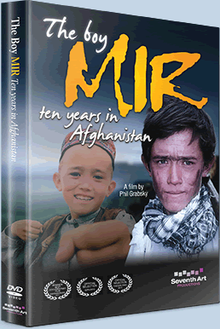
Respect for the subject was the central factor in the effectiveness of "The Boy Mir." Director Phil Grabsky's film follows a peasant boy in Afghanistan from ages eight to eighteen, during the dramatic events of the last decade, as he and his family struggle to survive amidst the chaos and then emerging new freedoms transforming their world.  Grabsky returned to Afghanistan periodically over ten years to tell Mir's story, creating a film that personalizes a story that exists for the West mostly in impersonal headlines.   (Here's my review of the film; I had an opportunity to interview Grabsky about 'The Boy Mir. ' Here's my blog, 'The Minute You Pull Out a Camera, You're Intervening').  

"An American Family," the "7 Up" series and "The Boy Mir" are varied in style and approach - but share three important elements that, I feel, make them effective films: Dedication of the filmmakers, trust and mutual respect between the filmmakers and their subjects, and uncommon patience.  If I have the opportunity (Consider contributing here) to create "Life Online," that's what I'll be striving for.